


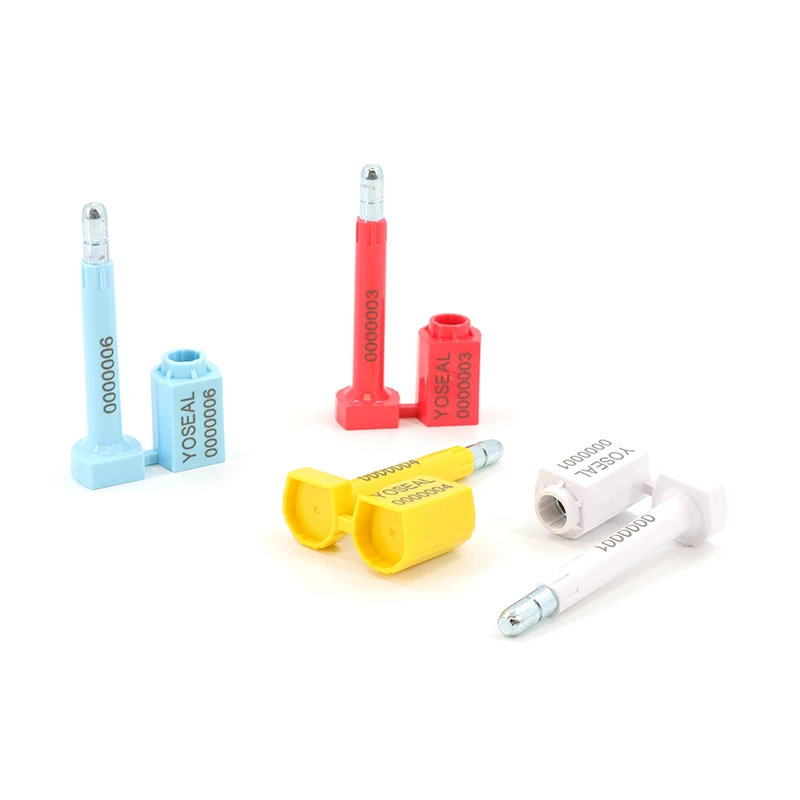
Applications of bolt seals
Bolt seals are often used for sealing (shipping) containers and are the most popular type of container seal. Their goal is to prevent manipulation and provide visible evidence to recipients if tampering has occurred. By uniquely numbering bolt seals to both pin and barrel, which is a requirement of many customs authorities, the recipient can check if the original bolt seal is still applied.
Most bolt seals can be applied by hand. Because of their great breaking strength a device like a bolt seal cutter is needed for removing or opening a bolt seal. Therefore bolt seals also are a measure of protection.

Certification of bolt seals
Most bolt seals are certified as ISO 17712:2013 high security seals. Certified high security seals are the standard for international freight and accepted by most customs around the world. They are CTPAT compliant as well, which means that they are accepted by US customs.
Synonyms bolt seal
ISO 17712:2013 high security bolt seals are also referred as barrier seals. The term container seal is also often used for bolt seal, although a container seal can be another type of security seal as well, such as the aforementioned cable seals. Finally bolt seals are also called bolt locks, security bolt locks, or sealing bolts.
Material Of Bolt Seal
Bolt seals are an incredibly important item for ensuring the security of cargo during transportation. When it comes to choosing the right bolt seal, it's important to consider the material that it's made from. In this regard, bolt seals can be made from a variety of different materials, but the most common materials used for their construction are steel and a special high-density plastic.
Steel bolt seals are typically the strongest option, providing an unbeatable level of durability and security. They are made from a tough alloy of high-grade steel, and they are resistant to cutting, sawing, and even most forms of chemical attacks. This makes them a reliable choice for securing high-value cargo in transit.
High-density plastic bolt seals, while not quite as strong as steel, are still a highly secure option. They are made from a specially engineered plastic that can withstand a lot of wear and tear, ensuring that they won't break or degrade even over long periods of time. What sets these seals apart is their added level of tamper evidence. When someone tries to break them, they snap apart and leave visible signs of tampering, such as translucent locking bodies.
Overall, both steel and high-density plastic bolt seals offer strong protection for cargo and provide users with the peace of mind that their shipments will remain secure while in transit.